Most new food and drink products fail. Not because the teams lack talent or taste, but because product development still leans on a slow, expensive loop: have an idea, make a batch, taste it, argue, tweak, repeat. Every cycle costs time, ingredients and the patience of whoever is funding it.
The promise of AI here isn't to replace the palate. It's to make that loop shorter and the bets smarter. Let me be clear up front about what that does and doesn't mean — because there's a lot of nonsense talked about "AI flavour."
1What AI actually does here (and what it doesn't)
AI doesn't taste anything. It has no palate. What it's genuinely good at is finding patterns across data humans struggle to hold at once — and three kinds of data matter in product development:
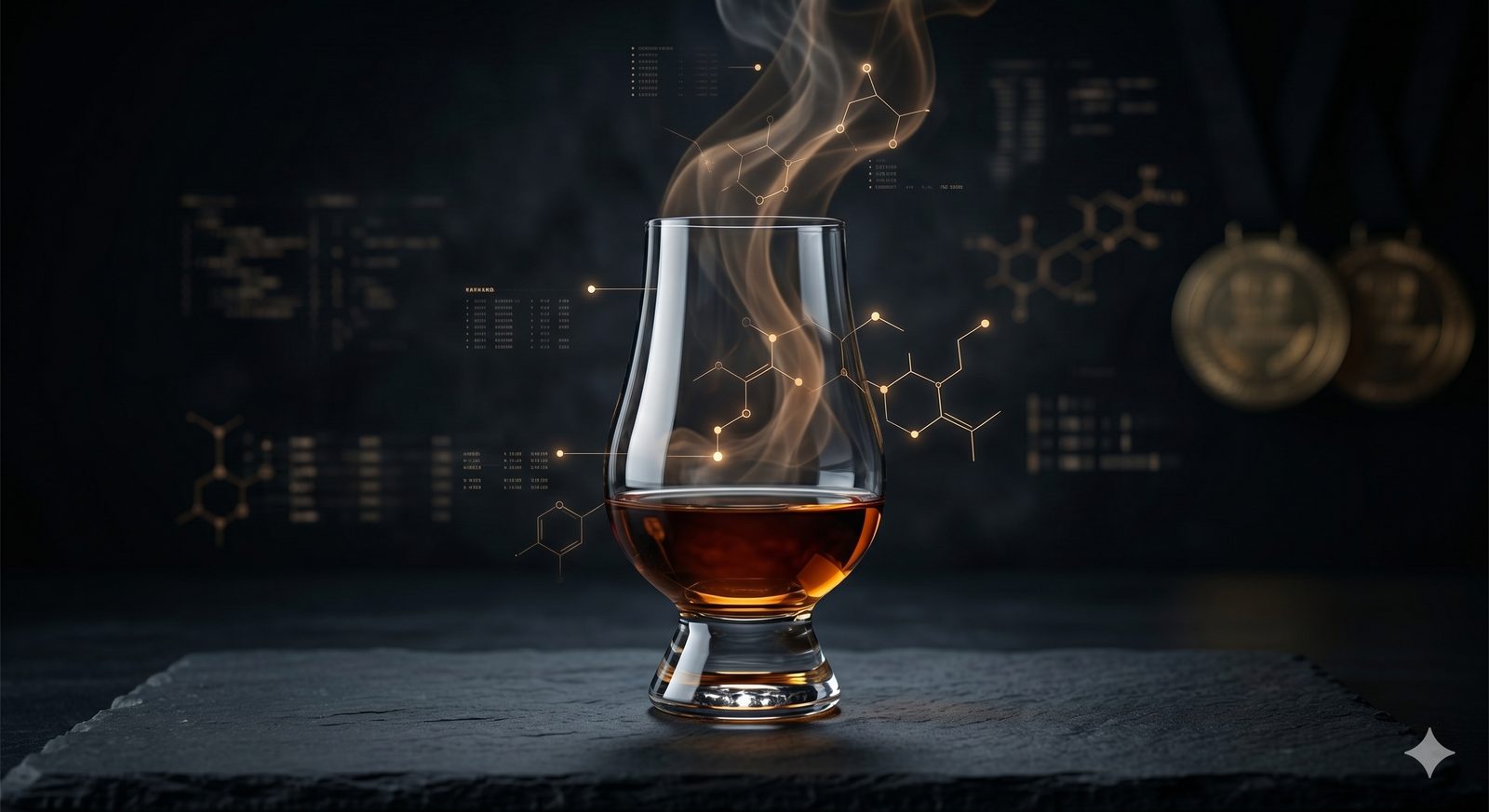
- Analytical data — the measurable chemistry of a product. Techniques like GC-MS break a flavour into its volatile compounds, giving a quantified fingerprint of what's actually in the glass.
- Sensory data — what trained panels and consumers actually perceive, captured in a structured way rather than as loose adjectives.
- Market data — what's selling, what's trending, what gaps exist on the shelf.
Teams already use all three individually. The opportunity is connecting them — a model that learns the relationships between the chemistry, the perception and the demand. That's where "predictive preference" comes from: estimating how a formulation will land before you commit to a full production run.
The goal isn't a robot that invents flavours. It's a sharper instinct, backed by data, that wastes fewer batches.
2A concrete example
Say you're developing a new hot sauce: bold but balanced, not just punishing heat. Traditionally you'd make a dozen variants and panel them, iterating by feel. With an analytical-plus-sensory approach, you measure the compound profile of each variant, capture structured panel scores, and let a model map which chemical signatures correspond to "balanced heat" versus "one-dimensional burn."
Now when you formulate the next variant, you're not guessing — you have a direction grounded in data: nudge these compounds up, those down. You still taste it; the human stays in the loop, always. But you've cut the dead-end batches dramatically. Over a programme, that's the difference between launching in one quarter and three.
3Why this matters more for smaller makers than for giants
The instinct is that this is big-corporate technology. I'd argue the opposite. Multinationals can afford to fail expensively and often. A contract manufacturer or founder-led brand cannot — every wasted cycle is real money and real runway. For them, a method that reduces wrong turns isn't a nice-to-have; it's the difference between surviving the launch and not.
The catch has been cost and capability — and that's changing. Analytical tools are more accessible and the modelling no longer needs a dedicated data-science team. The barrier now is mostly knowing how to connect the pieces sensibly, which is a strategy and process problem, not a technology one.
4Where I think this goes
I don't believe the future of product development is automated. I believe it's augmented. The maker's judgement, taste and creative instinct stay central — that's the part that can't be outsourced. What changes is that those instincts get a faster, sharper feedback loop and fewer expensive surprises. The teams that win won't have the most AI; they'll be the ones who built clean data habits early and used them to decide better, faster.
That's the system I'm most interested in building — and it starts long before any model, with the boring, essential discipline of measuring what you make.